Roof Tent Storage: The Complete Guide to Storing Your Roof Tent
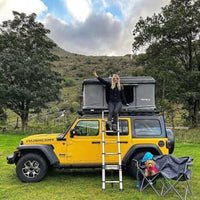
Good roof tent storage comes down to three things: clean, fully dry, and supported off the ground. Those 3 things also apply whether you leave the tent mounted on the car or storing it indoors between trips. This guide covers all five TentBox models - GO, Lite, Lite XL, Classic and Cargo - from the prep you do before you store it to the four most common places to store your roof tent. The guide also covers the TentBox Storage Trolley, which helps with storing and moving your roof tent between uses.
Why proper roof tent storage matters
Improper roof tent storage is the most common cause of mould, mildew and canvas damage. Trapped moisture is one of the biggest concerns. A tent closed up slightly damp in October has had five months to grow mould by the time you open it in March. By then the marks are usually permanent. The tent still keeps the rain out – it just won't look the way it did before.
TentBoxes run from £999 for the GO up to £2,499 for the Cargo. It's the kind of purchase worth looking after properly – and looking after it doesn't ask much. Ten minutes of drying and a dry, secure spot to store it is enough to protect it for years.
How to prepare your roof tent for storage
Preparing your roof tent for storage comes down to three steps – two essential, one well worth doing. Clean it, dry it, and take the soft kit out if you can.
1. Clean it thoroughly
Wash the fabric and shell with mild soap and warm water. Leave household detergents and solvents alone, because they can strip the water-repellent finish off the fabric. Give the corners and seams proper attention, since that is where grit and leaf debris gather. Dirt left in a seam holds damp against the fabric for months, and that is what causes lasting damage.
Once a year, reproof the fabric with Fabsil or Nikwax before it goes away. You can find more about reproofing on our FAQ page.
2. Dry it completely
Always let a roof tent air out fully and dry out before closing it for storage. Closing it damp is the single biggest cause of mould. Pick a dry day, open the doors and windows right up, and give it a few hours in moving air.
Our advice after any damp trip is to air the tent within 24 hours. The same rule applies before long-term storage, with one addition. Check the underside of the fold-out base and the fabric folded into the hinge line. Both could hold water you cannot see from inside the tent.
3. Remove the mattress and bedding
Not everyone gets round to this one, and that's okay – but if you want to give your TentBox the best chance of coming out the other side spot-free, it's worth doing. Foam and bedding hold moisture far longer than canvas or a shell, so a mattress left inside a closed tent is where mildew usually starts. Keep them indoors somewhere dry and airy, and stand the mattress on its edge rather than flat under other kit.
Can you leave a roof tent on the car when it's not in use?
You can, and plenty of owners never take theirs off. Every TentBox model is built to stay on all year. They are rated up to 50mph winds and use 3000mm stormproof fabric with taped seams, so a British winter sits well inside what they can handle. Leaving it up is always an option, and it means you’re ready to go TentBoxing on any free weekend.
If you plan to leave your TentBox on your car between trips, you'll need to check the mounting kit and travel cover straps regularly. Vibration from regular driving loosens fixings over time, so it's a good idea to tighten them with your 13mm spanner every few weeks. Secondly, make sure to air it out. Open the tent for a couple of hours every few weeks to release the condensation that can build up inside any closed, unused roof tent. Damp air with nowhere to go behaves the same on a roof as it does in a garage.
If you've got a Classic or Cargo and you're keeping it mounted all year, a Protective Cover is worth adding to the setup. It takes the brunt of what a UK driveway throws at a roof tent – bird droppings, tree sap, UV - so you're not scrubbing residue off the shell every few weeks. It's not essential, but it's one less thing to think about if the TentBox never comes off the car.
Two guides worth reading alongside this: leaving your TentBox on your car all year round and managing condensation in a roof tent.
Where to store a roof tent (4 methods)
When it comes to storing your roof tent you have 4 options which we have ordered by how much space and effort they take. All four follow the same rule: get the tent off bare ground and let air move around it.
Flat on the floor or a pallet
Lay the tent underside down on a wooden pallet or a few timber blocks. Having a gap underneath the tent and the ground is the main concern here – concrete holds damp and draws condensation, so a tent sitting flat on a garage or shed floor collects moisture along its base. Pallets are usually easy to find – often for free – and are perfect for this setup.
This is the simplest option if you have plenty of free floor space. It is also, however, the least efficient use of that space, since the tent’s full footprint is now occupied.
Upright or leaning against a wall
Angle the tent against a wall rather than standing it perfectly vertical. True vertical puts sustained weight through one side of the lid, which can warp a hard shell over months. A lean of 10 to 15 degrees spreads the load across the frame instead.
Cushion the edge touching the ground with an offcut of carpet, foam, or anything else you have available. Check what is bearing the weight before you walk away, and keep pressure off the gas struts, hinges and latches.
Hanging from the ceiling
Hoisting the tent up to the garage ceiling frees the floor completely. You need a rated pulley system with straps that support the base across its width, plus enough height to clear space for your car underneath.
On a dedicated TentBox storage trolley (recommended)
A storage trolley is the easiest and safest way to store your TentBox off the ground while keeping it easy to move and protecting the gas struts and hardware. It removes the two problems the other three methods leave you with: a permanent floor footprint, and a roof tent you cannot shift once it is in place.
The TentBox Storage Trolley (£199) is a steel frame on lockable castors. The castors roll smoothly on a garage floor and the brakes hold it in place once you have it positioned. An adjustable harness strap stops the TentBox from shifting, and the foam blocks take the pressure off the sides of the TentBox, and also relieve pressure off of the gas struts on the TentBox Cargo in particular.
Storage hooks on the back hang your ladder, LivingPod, Tunnel Awning or other accessories you may have off the floor, so the whole setup lives in one place. A drawstring bag holds the fixing brackets and harness straps when they are not in use.
It fits every TentBox model, measures 150 x 117 x 58cm, and one person can assemble it in about 30 minutes.
| Method | Main advantage | Main cost | Best for |
|---|---|---|---|
| Flat on a pallet | Free, no build | Uses the full footprint of the roof tent | Spare floor space |
| Leaning against a wall | Minimal floor space | Needs padding and a careful angle | Narrow garages |
| Hanging from the ceiling | Frees the floor entirely | Heavy lift, rated hardware, high ceiling | Tall garages, rarely moved |
| Storage Trolley | Off the ground and mobile | £199 | Small garages and sheds |
Roof tent storage solutions for small spaces
Not everyone has a garage or shed, and a roof tent takes up a serious amount of room. The good news is that most small-space problems have a straightforward answer.
With no indoor space at all, a breathable waterproof cover on the driveway works as a stopgap. Get the tent off the ground on a pallet, and make sure the cover breathes rather than sealing moisture in. The trade-off is exposure: UV fades fabric, and repeated freeze-thaw cycles are harder on seals and latches than a steady indoor temperature. It's a fine option to get you through a season, but if it's looking like a permanent setup, it's worth finding an indoor solution instead.
For a small garage or shed, the Storage Trolley is the space-saving answer. It holds the TentBox off the floor and lets you move it into a corner or out of the way of the car, which a pallet cannot do. It also lets you easily move it when needed.
One thing worth checking when storing is to make sure that your tent is covered by your existing car or home insurance while it is in storage, or insure it through a specialist camping-gear insurer. Cover is not automatic, and our roof tent FAQs page has more on this.
Checking on your roof tent during storage
It is important that you check in on the condition of your roof tent every few weeks. Make it more often if it stays mounted on your car and you drive regularly, because road vibration is what loosens hardware over time.
Three things to check each time:
-
Straps and mounting hardware, for anything that has gotten loose
-
Signs of damp or condensation inside, especially in the corners and along the base
-
Pooling water on top of a cover, which adds weight and can turn into mould
Each check takes two minutes. Catching damp in week two is a simple wipe-down. Finding it in month five can be difficult to take care of.
Storing a GO specifically? Our TentBox GO winter storage guide covers the flat-pack option, which is unique to that model.
Frequently Asked Questions
Can you store a roof tent outside?
Outdoor storage is an option if the tent has a breathable, waterproof cover and something underneath keeping it off wet ground. A driveway exposes the tent to more UV and bigger temperature swings than a garage or shed so treat it as a workable short-term option rather than the best long-term choice.
How do you stop a roof tent getting mouldy in storage?
Make sure the tent is completely clean and fully dry before you close it, because trapped moisture is the main cause of mould. Air it out for a few hours first, take the mattress and bedding out, and open it up every few weeks during storage to catch any damp early.
Can you store a roof tent on its side?
Storing a roof tent on its side works as long as you angle it rather than standing it perfectly vertical. Fully upright puts sustained weight through one side of the lid, which can warp a hard shell over time. Cushion the edge touching the ground and keep pressure off the gas struts, hinges and latches.
Do you need to remove the mattress before storing a roof tent?
Removing the mattress is best practice, though leaving it in won't automatically cause problems – it's about reducing risk, not guaranteeing an outcome. Mattresses and bedding hold onto moisture longer than a tent's canvas or shell, which makes them the most likely place for mildew to start if there's any dampness around. Store them separately somewhere dry when you can, rather than leaving them inside a closed tent.
Is a roof tent storage trolley worth it?
For most owners without dedicated garage racking, a trolley earns its keep. The TentBox Storage Trolley holds the tent off the ground, protects the gas struts and hardware with built-in foam blocks, and rolls out of the way on lockable castors. There is no DIY build needed, unlike a pallet or pulley system.
Good storage of your TentBox is not complicated. Clean it, dry it fully, take the bedding out, and put it somewhere off the ground with air moving around it. Do these steps and the TentBox you open in spring is the one you closed in autumn.
If you want one answer that covers the off-the-ground part and the small-space part together, the TentBox Storage Trolley does both. Still working out fitting or compatibility? Our vehicle checker page is the place to start.